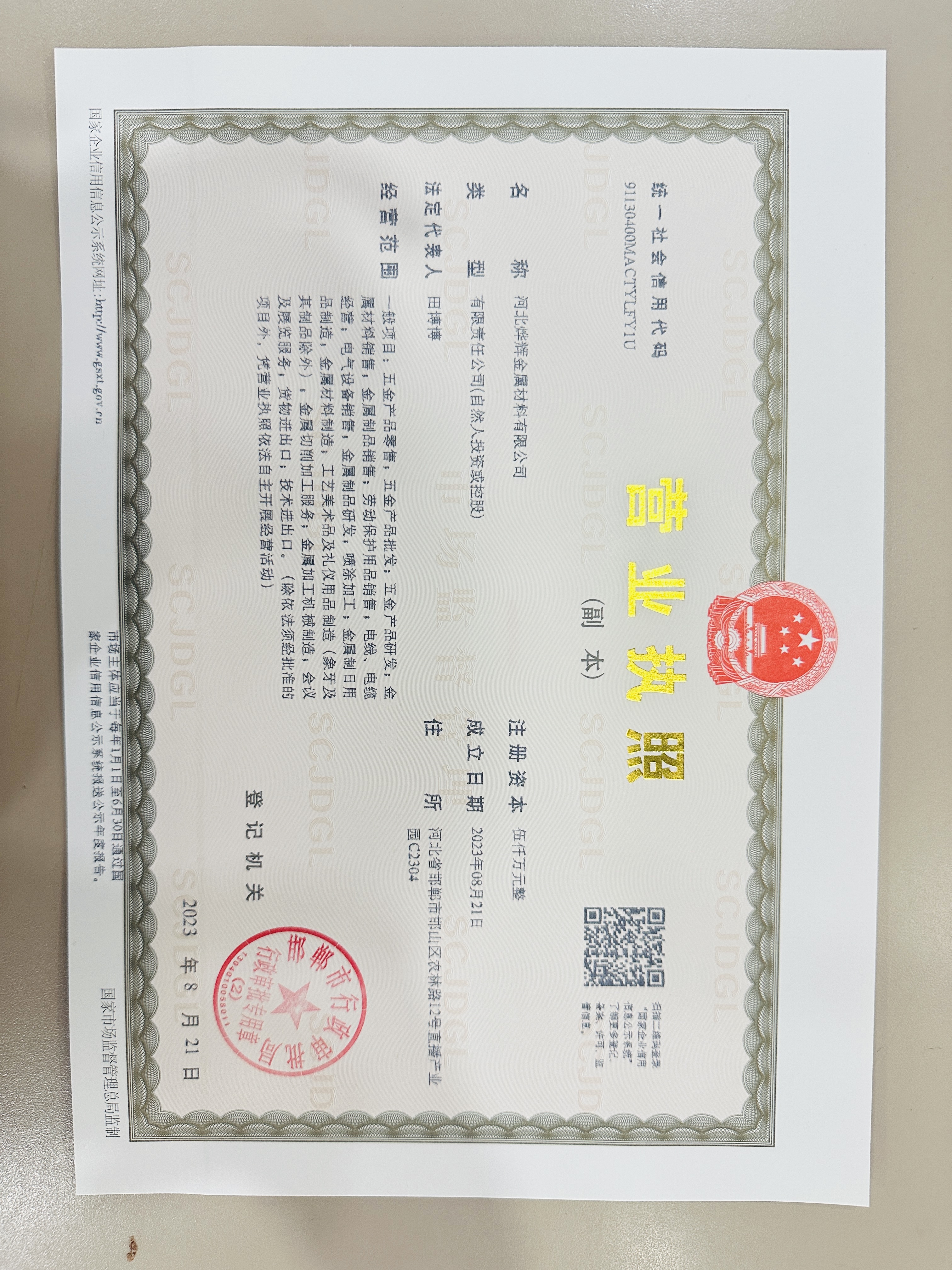
Welcome to HEBEI YEHUI METAL MATERIALS CO., LTD.

Understanding Tin Free Steel: A Sustainable Alternative in Metallurgy
Release time:
2025-12-05 12:30
Tin Free Steel (TFS) is a type of steel that is coated with a thin layer of iron oxide instead of tin, making it a highly desirable alternative in various applications. One of the most important characteristics of Tin Free Steel is its corrosion resistance, which is achieved without the use of tin, a material that can have environmental and health concerns associated with its mining and processing

Tin Free Steel (TFS) is a type of steel that is coated with a thin layer of iron oxide instead of tin, making it a highly desirable alternative in various applications. One of the most important characteristics of Tin Free Steel is its corrosion resistance, which is achieved without the use of tin, a material that can have environmental and health concerns associated with its mining and processing. This makes TFS an environmentally friendly choice, appealing to manufacturers looking to meet sustainability goals.
The production of Tin Free Steel involves a process of cold-rolling and surface treatment, allowing it to achieve the desired thickness and finish. This method not only enhances its mechanical properties but also improves its appearance, making it suitable for a wide range of applications. TFS is commonly used in the packaging industry, particularly for food and beverage containers, where hygiene and product preservation are paramount.
In addition to packaging, Tin Free Steel finds applications in the automotive and appliance industries. Its lightweight nature and strength make it an ideal choice for manufacturing components that require durability without compromising on weight. This is particularly essential in the automotive sector, where reducing vehicle weight can significantly enhance fuel efficiency and performance.
Furthermore, Tin Free Steel is often used in electrical applications, including transformers and motor components, due to its excellent magnetic properties. The absence of tin in its composition reduces the risk of contamination and enhances conductivity, making it a preferred option for various electronic devices.
From an economic perspective, while Tin Free Steel may have a slightly higher initial production cost compared to traditional tinplate, its long-term benefits often outweigh these concerns. The reduced environmental impact and enhanced performance characteristics contribute to lower lifecycle costs and a smaller carbon footprint, aligning with the growing demand for sustainable materials in the global market.
In conclusion, Tin Free Steel represents a significant advancement in metallurgy, particularly within the stainless steel sector. Its unique properties and versatility make it an optimal choice for various industries, promoting sustainable practices while delivering high-quality performance. As businesses continue to prioritize environmentally friendly solutions, the relevance of Tin Free Steel is likely to increase, paving the way for innovative applications and market growth. With its numerous benefits, Tin Free Steel is set to play a vital role in shaping the future of materials used in manufacturing and construction.
The production of Tin Free Steel involves a process of cold-rolling and surface treatment, allowing it to achieve the desired thickness and finish. This method not only enhances its mechanical properties but also improves its appearance, making it suitable for a wide range of applications. TFS is commonly used in the packaging industry, particularly for food and beverage containers, where hygiene and product preservation are paramount.
In addition to packaging, Tin Free Steel finds applications in the automotive and appliance industries. Its lightweight nature and strength make it an ideal choice for manufacturing components that require durability without compromising on weight. This is particularly essential in the automotive sector, where reducing vehicle weight can significantly enhance fuel efficiency and performance.
Furthermore, Tin Free Steel is often used in electrical applications, including transformers and motor components, due to its excellent magnetic properties. The absence of tin in its composition reduces the risk of contamination and enhances conductivity, making it a preferred option for various electronic devices.
From an economic perspective, while Tin Free Steel may have a slightly higher initial production cost compared to traditional tinplate, its long-term benefits often outweigh these concerns. The reduced environmental impact and enhanced performance characteristics contribute to lower lifecycle costs and a smaller carbon footprint, aligning with the growing demand for sustainable materials in the global market.
In conclusion, Tin Free Steel represents a significant advancement in metallurgy, particularly within the stainless steel sector. Its unique properties and versatility make it an optimal choice for various industries, promoting sustainable practices while delivering high-quality performance. As businesses continue to prioritize environmentally friendly solutions, the relevance of Tin Free Steel is likely to increase, paving the way for innovative applications and market growth. With its numerous benefits, Tin Free Steel is set to play a vital role in shaping the future of materials used in manufacturing and construction.
Related News
Understanding Tin Mill Black Plate: A Key Component in the Metal Industry
Tin Mill Black Plate (TMBP) is an integral product in the metallurgy and steel sectors, specifically related to the production of tinplate and other coated metals. TMBP is essentially a thin sheet of steel that has undergone a series of processes to enhance its practicability and durability. This material typically consists of low-carbon steel and is mainly produced through cold-rolling processes
Among the various materials that have emerged as key players in this sector, Conventional Grain Oriented Silicon Steel (CGO) has established itself as an indispensable component in transformer cores and electrical applications.
Why Tin Mill Black Plate is Essential for Quality Steel Production
Why Tin Mill Black Plate is Essential for Quality Steel Production Understanding Tin Mill Black Plate Tin Mill Black Plate (TMBP) is an essential material in the steel production industry, primarily used for manufacturing tinplate and other coated steel products. As a flat-rolled steel product, TMBP undergoes various processes to achieve the desired thickness and surface quality, making it a key c
Understanding Tin Mill Black Plate: A Key Component in Stainless Steel Production
Tin Mill Black Plate (TMBP) is a type of flat steel product that is primarily used in the manufacturing of tinplate and other coated steel products. The production process involves cold rolling steel sheets to achieve a desired thickness, followed by a series of processes that enhance the material's properties. TMBP is characterized by its high quality and versatility, making it a crucial componen
Exploring the Versatility of Tin Mill Black Plate in Modern Manufacturing
Exploring the Versatility of Tin Mill Black Plate in Modern Manufacturing Table of Contents 1. Introduction to Tin Mill Black Plate 2. Key Properties of Tin Mill Black Plate 3. Manufacturing Process of Tin Mill Black Plate 4. Diverse Applications of Tin Mill Black Plate in Modern Industry 4.1 Packaging Solutions 4.2 Automotive Industry Use
Understanding Tin Free Steel: A Sustainable Alternative in Metallurgy
Tin Free Steel (TFS) is a type of steel that is coated with a thin layer of iron oxide instead of tin, making it a highly desirable alternative in various applications. One of the most important characteristics of Tin Free Steel is its corrosion resistance, which is achieved without the use of tin, a material that can have environmental and health concerns associated with its mining and processing
10% DISCOUNT FOR NEW CUSTOMERS
HEBEI YEHUI METAL MATERIALS CO., LTD.


Copyright © HEBEI YEHUI METAL MATERIALS CO., LTD.